Slate vs Clay Tile: Which Roof Covering Suits Your Period Home?
You can usually guess what a roof is made of from the pavement. Slate reads cool and precise; clay reads warm and slightly irregular. The question only becomes urgent when a roofer says the words "it's had it" and a decision that felt abstract suddenly has a scaffolding bill attached to it. Both materials can outlast the people who installed them, which is exactly why the choice matters. You are not buying a roof for the next five years. You are choosing what the next owner will look at, insure, repair and possibly curse.
But "outlast" is not the same as "maintenance-free." A slate roof can survive a century and still fail because a handful of copper nails gave up. A clay roof can look magnificent at eighty and still shed tiles after one clumsy trip across it. The useful question is not which material is better in the abstract. It is which material is right for this house, this structure, this street and this budget.
What each material actually is
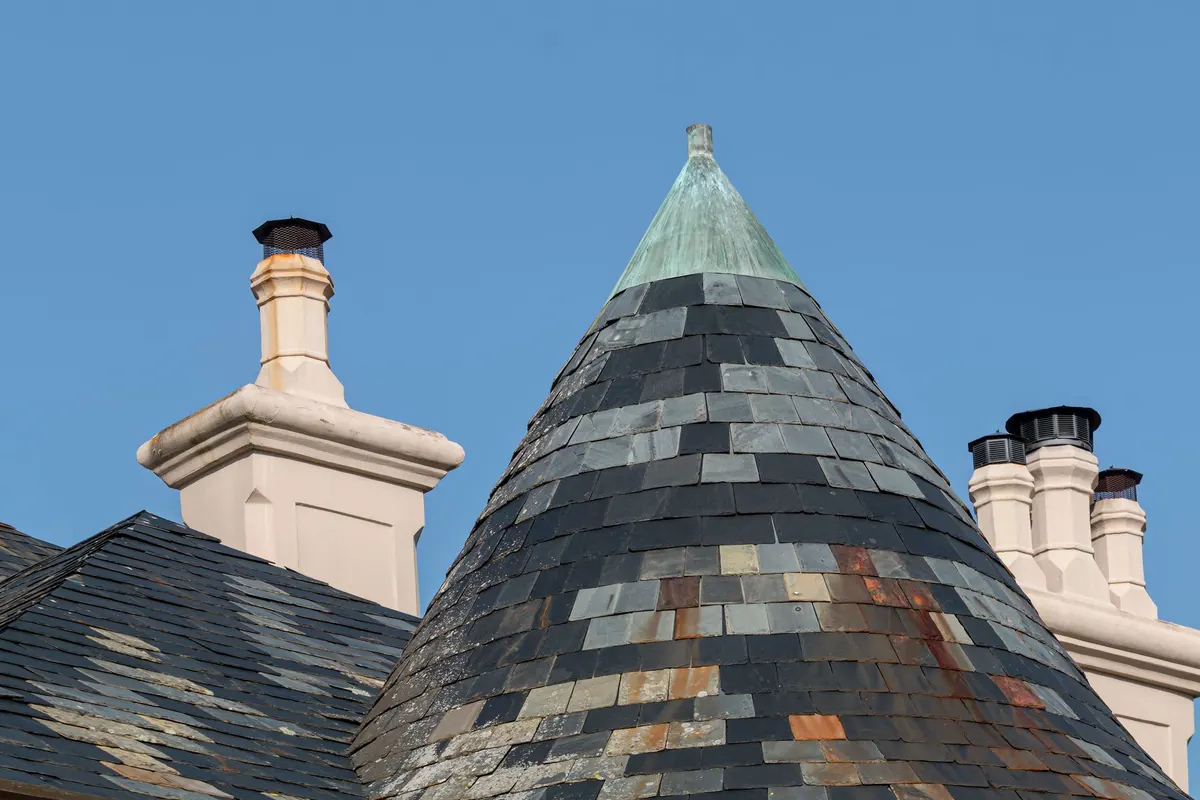
Slate is a metamorphic rock, split into thin sheets and trimmed by hand or machine. Good slate is dense, fine-grained and rings slightly when tapped. It is chosen for its ability to shed water, resist frost and hold a sharp line. Welsh slate is the classic British example, but there is also Westmorland green, Cornish slate, Spanish slate, Brazilian slate and reclaimed slate from demolished roofs. Each has a different colour, thickness, surface and expected life.
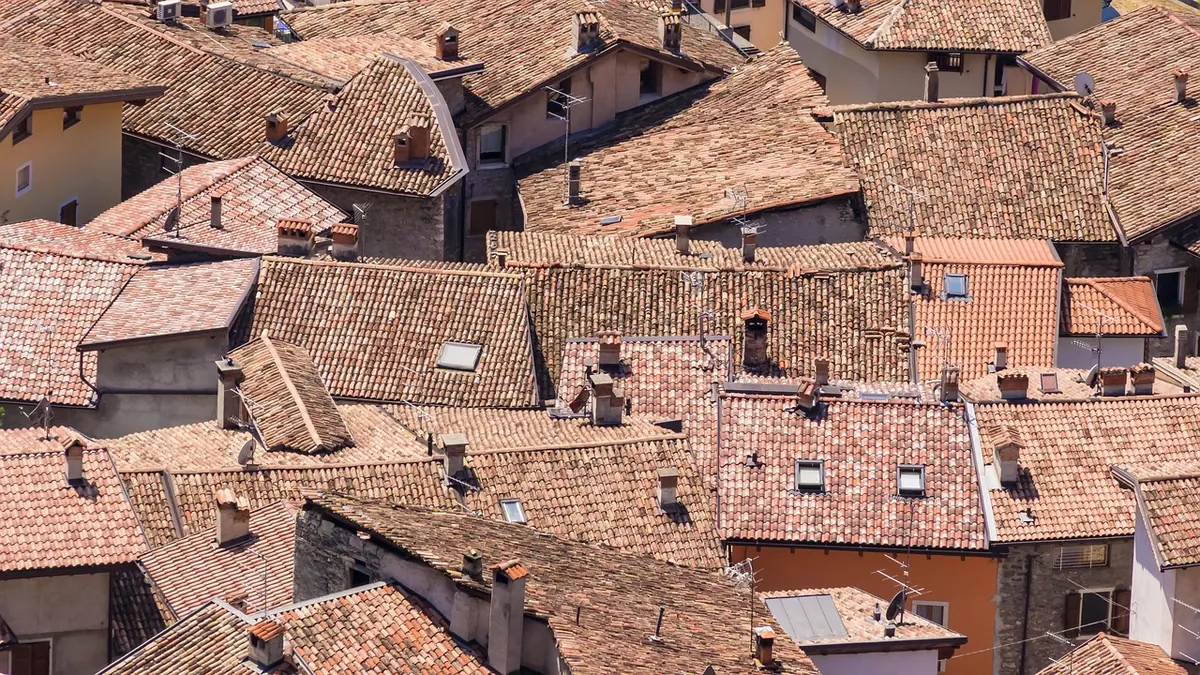
Clay tile is fired earth. It may be a plain tile, a pantile, a double Roman, a clay interlocking tile or a hand-made peg tile. The colour comes from the clay body, the firing temperature, or a surface coating. Some clay tiles are smooth; others are sand-faced, creased or deliberately uneven. That variation is not a defect. It is the reason clay looks so at home on older houses, especially where the roof line has settled and the tiles have weathered at different rates.
- Slate: natural stone, usually thinner, cooler in tone, precise in line, available in diminishing courses.
- Clay: fired earth, warmer in tone, more textured, often modular, with a wider range of profiles and colours.
- Both: heavy, durable, repairable in theory, and dependent on good battens, fixings, flashings and ventilation.
Looks: cool precision versus warm character
On a Georgian townhouse or a Regency terrace, slate often looks right. The roof is meant to be quiet. It sits behind a parapet or below a cornice and does not compete with the brickwork. A good slate roof has a subtle rhythm: courses aligned, laps consistent, colour shifting from blue-grey to purple-grey as the light changes. Bad slate looks like a spreadsheet. Every tile is the same, the edges are too sharp, and the roof feels like a hat bought online.
On a Victorian villa, a cottage or a farmhouse, clay can be the more honest choice. Red, orange, buff and brown tiles give a roof warmth and movement. A clay pantile roof in East Anglia or a plain tile roof in Kent or Sussex is part of the local language. Put slate on some of those houses and the building can look as if it has been dressed for a funeral. Put clay on a slate terrace and it can look as if someone has replaced a dinner jacket with a loud jumper.
"Both are good roofs," one roofer told me. "The trouble starts when people choose the material they like on holiday rather than the material that belongs on the house."
Weight and structure: the hidden conversation
This is where the romance meets the rafters. A traditional clay plain tile roof is often significantly heavier than a slate roof of similar coverage. Some interlocking clay tiles are lighter, but they are not the same as hand-made plain tiles. If your roof was designed for slate, switching to a heavy clay tile may overload the structure. If it was designed for clay, switching to slate may be fine structurally but wrong visually and historically.
The roof structure matters as much as the covering. Rafters, purlins, trusses, battens, ridge boards and wall plates all have a say. A surveyor or structural engineer may need to check the roof before you commit. The cost of strengthening a roof can easily exceed the difference between one tile and another. This is also the moment to replace failing battens, upgrade underlay, improve ventilation and check flashings around chimneys, valleys and parapets. A new covering over tired battens is an expensive way to postpone the same problem.
Pitch, weather and detailing
Both slate and clay need the right pitch, lap and fixing. Slate can perform well on lower pitches when the slates are large and the headlap is sufficient, but it is not infinitely adaptable. Plain clay tiles usually want a steeper pitch to shed water safely. Some interlocking clay tiles can cope with lower pitches, but they may look too modern for a period roof. Local weather matters too. Wind-driven rain, coastal salt, frost, snow load and intense sun all affect performance and appearance.
Fixings are just as important as the tile. Slate is traditionally fixed with copper or galvanised nails, though stainless steel is now common. Clay tiles may be nailed, screwed or hooked, depending on the profile and exposure. In exposed areas, every fixing matters. A roof can be made of excellent materials and still fail because the wrong nails were used. Ask what will hold the roof down, not just what you will see from the pavement.
Cost: the day-one bill versus the long game
Natural slate usually costs more upfront than clay, especially if you choose a named British slate or a reclaimed match. Imported slate can be cheaper, but quality varies enormously. Clay tiles range from modest machine-made products to expensive hand-made tiles with a waiting list. The covering is only part of the invoice. Scaffolding, labour, leadwork, battens, membrane, ventilation, waste removal and access can add up quickly.
The long game matters. A good slate roof may last seventy-five to one hundred and fifty years or more. A good clay roof may last fifty to one hundred years, sometimes longer. Cheaper materials may last thirty to fifty years and then start costing you in repairs. Neither material is cheap if it is installed badly. A poor slate roof can fail in twenty years. A poor clay roof can leak from day one.
Maintenance, repairs and insurance
Both materials need occasional attention. Ridge tiles, mortar, flashings, valleys and gutters are common weak points. Slate can slip when nails corrode, and individual slates can be replaced if matching stock is available. Clay can crack under foot traffic, frost or impact, and individual tiles can also be replaced. The trouble is matching. Reclaimed slate and clay are finite resources. If you choose a colour or profile that is discontinued, future repairs become a scavenger hunt.
Insurance companies may ask about the age and condition of the roof. Some will insist on repairs after a storm; others may adjust premiums. If you are planning solar panels, roof lights or a loft conversion, think about how the roof will be walked on. Both slate and clay are brittle under a careless boot. A proper roof anchor and a roofer who understands old materials are worth more than a cheap quote.
Planning, conservation and heritage rules
If your home is listed or in a conservation area, you may need permission before changing the roof covering. Even like-for-like repairs can require consent if the material, profile or colour changes. Planners often expect natural slate where slate was original, and clay where clay was original. They may also care about the size and coursing of slates, the colour of clay, the ridge details and the type of mortar. In some areas, an Article 4 direction removes permitted development rights, so you cannot assume you are free to choose.
This is not red tape for its own sake. A period street works because the roofs agree with one another. One house with the wrong material can make the whole terrace look unsettled. If you are unsure, ask the local conservation officer before you order materials. It is cheaper than arguing after the scaffolding goes up.
Which suits your period home?
Start with what was there originally. Look at old photographs, neighbouring roofs, roof voids and remnants under the eaves. A roofer or surveyor may find evidence of the original covering, even if it has been replaced. Then consider the structure, the pitch and the local character. Finally, think about budget and maintenance. A reclaimed slate roof that matches the street may be better than a cheap new clay roof that does not. A high-quality clay tile that suits the region may be better than an imported slate that looks almost right.
- Match the original if possible. Like-for-like is usually the safest choice for period homes and conservation areas.
- Check the structure first. Do not assume the roof can carry a heavier covering without reinforcement.
- Buy the best you can afford. A smaller area of good material often beats a large area of poor material.
- Plan for repairs. Buy extra slates or tiles and store them somewhere dry and safe.
- Use a roofer who knows old roofs. Ask for local examples and a written specification.
Photo: David McElwee / Pexels